Ah, the mysteries of All Snakes Day, a lesser-known but intriguing alternative to Saint Patrick's Day in the mainstream world—but very much a popular topic each year amongst pagan peoples.
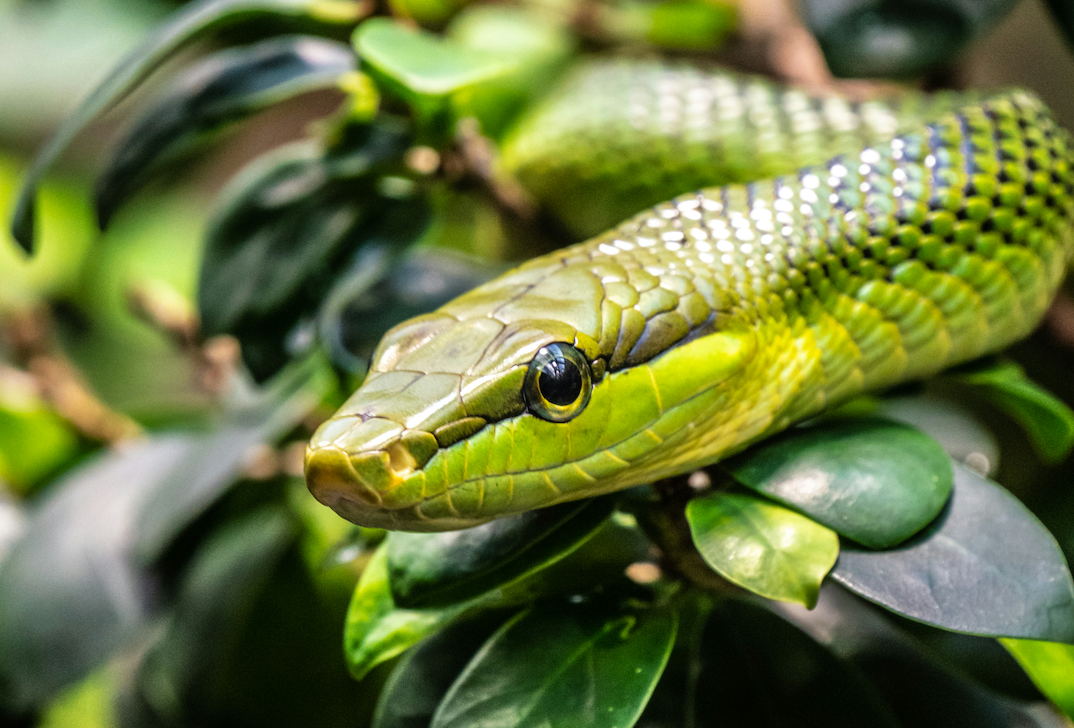
Celebrating “All Snakes Day” each year on March 17th as a protest against St. Patrick’s Day has become common amongst modern pagan peoples in response to the myth of St. Patrick driving out the “snakes” in Ireland. This has long been regurgitated as a metaphor for suppressing or driving out Druid Priests and Pagan Peoples during the rise of Irish Catholicism.
Though there are many opinions floating around and little historical evidence to back these claims, here is my personal take on it. Despite St. Patrick not being personally responsible for every action that took place relating to the rise of monotheism, and specifically Christianity, in Ireland at the time, he very much has become a symbol for that era and movement.
If anything, the fact of Patrick’s much smaller role in Christianizing Ireland should be a reason to do away with St. Patrick’s Day, not All Snakes Day. Yet, Irish and Irish-descended people, along with plenty of non-Irish people, continue to celebrate his myth every March. Why? Because myths have power; when they are amplified through many voices and many years, they gain even more power.
All the while, the sacred symbol of snakes as a representation of esoteric wisdom and the Great Goddess, has been continuously trampled over the centuries. When I think of All Snakes Day, regardless of the significance (or lack thereof) of St. Patrick’s role in Christianizing the “heathen” lands, I love the idea of honoring and celebrating the serpent, a symbol of transformation, rebirth, and healing not just in Celtic culture, but throughout ancient traditions worldwide.
Sure, there may not be historical evidence of an Irish pagan genocide or a great violent Druid Priest purge—but the rise of monotheism has no doubt altered the world as we know it today from it once was. Many of us who choose to continue celebrating All Snakes Day are simply fighting myth with myth, and recognizing a symbol that is representative of who we are and what we believe rather than celebrating an individual who does not hold significance to us in our nature worship and pagan practices.
Now when we dive into fighting myth with myth, I love this quote from D.R. Bartlett,
This is where it gets slippery; we’re treading into the realm of myth and symbol, which is notoriously “faulty” and not at all “logical.” That those who created the myth of Patrick - probably Medieval monks, aided and abetted by story-telling commoners – assigned the man who supposedly Christianized Ireland with also cleansing it of serpents isn’t a random coincidence. Neither was it thrown in as some secondary superpower, like making roses bloom in the desert; the snake is a very powerful, significant symbol in Christianity. Of course there isn’t an explicit connection between snakes and Druids in the literature. That’s precisely because snakes were already understood symbols that listeners could infer what they stood for: Druids, soothsayers, or whatever other un-Christian group is currently in the Church’s crosshairs.
So, in summation, the whole St. Patrick myth is just that – mythology. He didn’t convert the whole island to Christianity all by himself and Ireland never had any snakes to begin with. Again quoting Daimler, “Bad history does Paganism no favors.” I agree. So what does all this have to do with modern-day Pagans and All Snakes’ Day? It has to do with power: specifically, the power of myths and symbols. As commenter Crossing the Abyss states on Daimler’s blog, “mythological histories are far more significant psychologically than actual historical events.”
D.R. Bartlett
St. Patrick, “driving out the snakes” represents, factually or not, Catholicism’s conquest over Paganism in Ireland. So for me, choosing to celebrate All Snakes Day, is about continuing to follow the old ways. Embracing that which has been believed to be lost, forgotten, or done away with. And honoring the Great Goddess, and all of the goddesses associated with snakes, serpents, and sacred wisdom.
For those on a Celtic Pagan path, the goddess Brigid is one of the primary divine beings associated with snakes. Brigid's connection with snakes deepens her role as a guardian of esoteric knowledge, guiding seekers through their own personal transformations and illuminating the hidden mysteries of the universe. Just as the snake spirals around itself in a dance of constant renewal, so too does Brigid inspire us to explore the deeper mysteries of our existence and emerge wiser.
Hekate, the triple-formed goddess of the crossroads, magic, and the underworld, is often depicted accompanied by snakes as symbols of transformation and renewal. Her wisdom transcends boundaries and guides those who seek her counsel through the depths of their soul.
Lilith, a figure of feminine power and independence, is often associated with serpents as symbols of wisdom and temptation. Lilith embodies the untamed aspects of femininity and challenges societal norms with her fierce spirit.
Medusa, while often misunderstood as a monster, Medusa's story holds deeper truths. The snakes adorning her head symbolize hidden wisdom and protection. Those who gaze upon her reflect on their own inner darkness and fears.
Meretseger, the Egyptian cobra goddess of the Theban necropolis, Meretseger watches over sacred lands with a vigilant eye. Her serpentine form embodies protection and guardianship over hidden knowledge buried beneath the sands of time.
Renenutet, The Egyptian cobra-headed goddess of nourishment and abundance, Renenutet's serpentine presence signifies the cycles of growth and harvest. She bestows blessings upon those who cultivate wisdom with patience and diligence.
Wadjet, the Egyptian cobra goddess of protection and royalty, Wadjet's image adorns crowns as a symbol of divine authority. Her wisdom shields those who honor her with grace and guidance.
Nagapooshani, the Hindu serpent goddess revered for her transformative powers and connection to primal energy. Nagapooshani's serpentine form represents the kundalini energy that rises within seekers on the path to enlightenment.
Athena, the Greek goddess of wisdom and warfare, Athena's association with snakes reflects her strategic intellect and ability to navigate challenges with grace. Her wisdom shines like a beacon for those in search of clarity amidst chaos.
Astarte, the Phoenician goddess of fertility and war, is often depicted with serpents coiled around her arms, symbolizing rebirth and regeneration. In her embrace, the snake represents the shedding of old skin to reveal a new self, much like the cycles of life and death.
Isis, the Egyptian goddess of magic and motherhood, is closely associated with the serpent as well. In Egyptian mythology, she used the power of snakes to protect her child Horus, and to bring healing to the sick. The snake here embodies protection and healing energies, guiding us through the shadows to find light.
Hathor, the Egyptian goddess of love, music, and joy, also shares a connection with serpents. In some depictions, she wears a headdress adorned with horns and a sun disk flanked by cobras. These serpents symbolize her power to strike down those who threaten her devotees while also representing the duality of life - both destructive and regenerative forces intertwined. feeding off them for quite some time.
Honor the serpentine energies that weave through the mysteries of the universe.
May you walk your path with wisdom and prudence. Blessed be on your journey of spiritual growth and healing.
Blessed be, Wise Ones!
Blessed be, Silent Ones!
Blessed be, Serpents!
The Mystic's Journey Wisdom School is an in-depth 3.5 year program that is currently offered virtually through The Star Village website and is coming soon to the physical location of The Star Village that we're building. Through this Wisdom School, you'll have access to learn more than 40 types of witchery alongside the ancient esoteric wisdom of the goddesses as viewed through multiple pantheons and spiritual traditions.
Unlike many virtual classes or courses, The Mystic’s Journey is an interactive gamified quest where you earn crystals as you learn, discover and unlock easter eggs throughout the platform, embark on side quests to learn about specific topics in a deeper way, and be a part of a forum to engage with other spiritual practitioners.
In addition to The Mystic's Journey Wisdom School, Kate Jade also offers a mentorship program called The Death Witchery that exclusively focuses on death magic.
Pagan is a word that gets a bad rap in most religious communities—and rightly so. Not because paganism is inherently bad but because it encourages people to ask questions, recognize the sacredness of life within themselves and others, step into their own power as an individual, and no longer be susceptible to herd mentalities. These things often elicit fear in religious leaders who build their livelihoods on controlling others through fear. When people no longer fear asking questions, no longer fear viewing others’ lives as equally sacred, no longer fear tapping into their own power, and no longer fear swimming upstream, it is nearly impossible to control them. For religious communities, that is a “bad” thing, not because it’s actually bad, but because it no longer benefits those who have been in control for far too long.
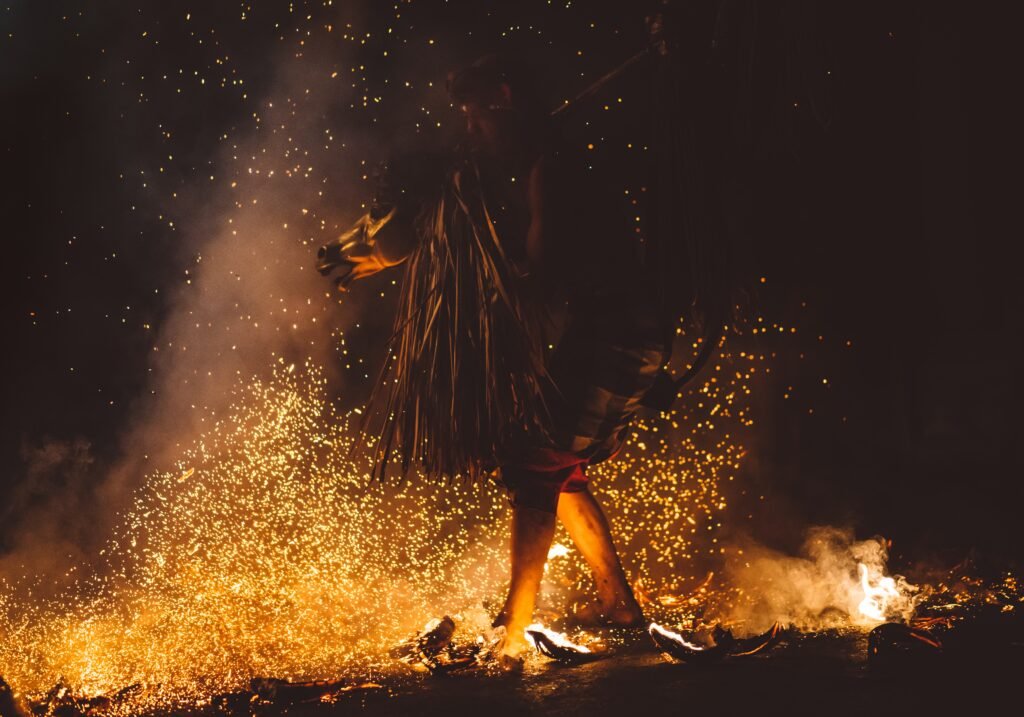
Paganism is a call to be free from the fear of human beings in order to live in unison with nature and the divine. Paganism may be defined as someone who is one with nature, and to us, that is about respect more than anything. For we are not worshiping the trees themselves, but rather recognizing the energy and spirit that flows through them as being sacred, just as we recognize the energy within ourselves and every other person we encounter.
Every individual who identifies as pagan is unique and their paths all look different. This is because paganism is not a religion that dictates what you do and when you do it but rather encourages you to find your own way of connecting with the sacredness of life and the divinity of our existence.
Some pagans may focus solely on nature, connecting with plants and trees. They may find peace and purpose through gardening or spending time outdoors. Others may focus on their connection with energy as a whole and how it moves through different people, animals, or plants. And others still may simply allow each day to bring about a newness with zero expectations and solely focus on going with the flow. There is no right or wrong way to be a pagan or practice paganism. Simply find freedom from the oppression of religion, and if claiming the title of “pagan” is still too problematic after having claimed other labels over your lifetime, then it’s okay to simply “be.”
Pagan practitioners often recognize the feminine face of divinity. With that being said, though, there are some Pagan paths, such as the cult of Odin or of Mithras, that offer exclusive allegiance to one male god but they do not deny the reality of other gods and goddesses, as monotheists do.
As promised, I do want to clarify what is meant by the word ‘cult’ as it has always meant the specialized veneration of one particular deity or pantheon and has only recently been extended to mean the worship of a deified or semi-divine human leader in a negative light in modern times. For example, the cult of Isis would be those who are devoted exclusively to her. In contrast, non-Pagan religions, such as Judaism, Christianity, and Islam, often but not always, abhor the very idea of female divinity. A closer look at the Christian bible, with a lot of recovery work on the translations and interpretations, reveals that the Holy Spirit figure of their religion was the feminine counterpart to the Father God figure. This is completely lost in modern patriarchal religion but is an erasure of the sacred feminine that can be traced back to the origins of the religion.
In the present day, the Pagan tradition manifests both as communities reclaiming their ancient sites and ceremonies, to put humankind back in harmony with the Earth, and as individuals pursuing a personal spiritual path alone or in a small group. To most modern Pagans in the West, the whole of life is to be affirmed joyfully and without shame, as long as other people are not harmed by one’s own tastes.
The Mystic's Journey Wisdom School is an in-depth 3.5 year program that is currently offered virtually through The Star Village website and is coming soon to the physical location of The Star Village that we're building. Through this Wisdom School, you'll have access to learn more than 40 types of witchery alongside the ancient esoteric wisdom of the goddesses as viewed through multiple pantheons and spiritual traditions.
Unlike many virtual classes or courses, The Mystic’s Journey is an interactive gamified quest where you earn crystals as you learn, discover and unlock easter eggs throughout the platform, embark on side quests to learn about specific topics in a deeper way, and be a part of a forum to engage with other spiritual practitioners.
In addition to The Mystic's Journey Wisdom School, Kate Jade also offers a mentorship program called The Death Witchery that exclusively focuses on death magic.
Friday the 13th, a date that has long been associated with bad luck, superstition, and evil. But what many people may not realize is that it's a fascinating tale that goes beyond mere superstition and bad luck, finding its origins in the sacred goddess worship of pagan peoples. Being a less frequent occurrence in a given year, with the 13th of the month falling on a Friday an average of 1.72 times a year in the Gregorian calendar, there are a lot of conflicting beliefs depending on what your cultural background and beliefs may be. For some, Friday the 13th is a day to batten down the hatches and hide themselves away, and for others, it's a holy day in its own right, that is to be honored and embraced.
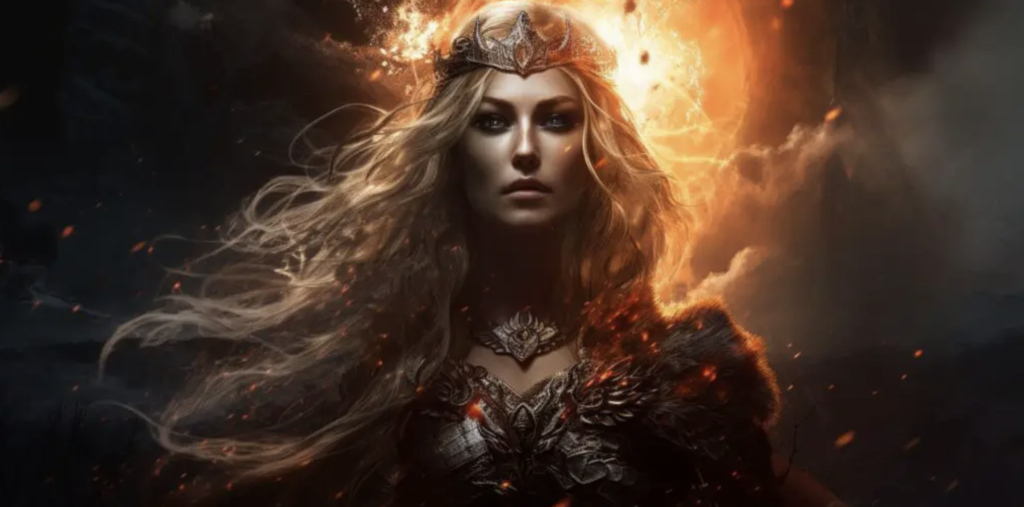
For us, at the Sacred Wisdom Society, we hold the latter view that Friday the 13th is a sacred day. The significance of Friday in this context cannot be overstated. Known as "Frigg's Day," it was actually named after Frigg (/frɪɡ/; Old Norse: [ˈfriɡː]) a goddess, one of the Æsir, in Germanic mythology. In Norse mythology, the source of most surviving information about her, she is associated with marriage, prophecy, clairvoyance, and motherhood, and dwells in the wetland halls of Fensalir. She was the Queen of Asgard, wife of Odin, and mother of Baldur. Her name translated literally as "beloved" and she was held in very high status amongst the people of the time. Sound like any other Great Lady's you know of?
A quick Google search, regardless of your spiritual beliefs will highlight the origins of the naming of Western days of the week (much like how the names of the planets in our solar system line up with many of the gods and goddesses of ancient cultures—hmm—coincidence?) In many ancient cultures, Friday was considered a day to honor and celebrate Frigg, or the Great Goddess (singular), or all of the goddesses (plural), or the sacred divine feminine that's in all of us, or even simply the power of the womb to bring forth life.
The beliefs when paganism are vast, with people of many different backgrounds and traditions finding their own way to connect to divinity and the universe. What many pagans had in common, though, was a true reverence for nature and the energy that connects us all, often brought into existence through the goddesses we can connect to and understand on a smaller scale, who symbolized different aspects of life, such as the moon, animals, trees, liminal space, healing, elements, etc. This reverence for the divine feminine led to Friday being seen as an auspicious day for honoring these goddesses and our own role that we play in the grand universe that we live in.
The number 13 has long been associated with mysticism and sacredness in various cultures around the world. From ancient civilizations to modern-day beliefs, the significance of this number has captured the imagination of many. One fascinating aspect of the number 13 is its connection to lunar cycles. The lunar cycle, which spans approximately 29.5 days, represents the phases of the moon as it orbits around the Earth, with approximately 12-13 lunar cycles in a single solar cycle (one year). This alignment between the sacred number 13 and lunar cycles adds another layer of mystique to their significance, with many pagans recognizing this connection symbolizes harmony between celestial rhythms and earthly existence.
Furthermore, many ancient cultures revered both numbers separately for their own unique symbolism. The number 13 often represents transformation, rebirth, and spiritual growth. This, with lunar cycles’ association with feminine energy, intuition, and cyclical patterns found in nature, makes understanding why the number 13 is considered sacred even more intriguing.
Paganism played a significant role in shaping these beliefs surrounding Friday the 13th, which was a rare conjunction between the already beloved day of Frigg or the goddess and the symbolic number 13. Over time, however, as societal norms shifted and religious beliefs changed, these pagan traditions were demonized by those seeking to establish new power structures.
According to folklorists, there is no evidence for the superstition of an unlucky Friday the 13th before the 19th century. Rumors of Friday the 13th being negatively associated with Christian beliefs, such as Jesus Christ being crucified on this day took hold of people over the last couple centuries. Other links to 13 and Friday came about with a different view of the betrayal of Jesus Christ by Judas, with 13 people being present at the Last Supper, the Norse tale of the god Baldur dying after the god Loki, a 13th guest at a dinner party arrived and mischief ensured. But regardless of how these tales seemingly ended, they all played roles in the death and rebirth cycles told through stories at the time and were never intended to be bad omens of a Friday falling on the 13th of the month.
Even in modern times, pop-culture films have harped on the fears of people surrounding Friday the 13th, known as paraskevidekatriaphobia or friggatriskaidekaphobia, to further perpetuate narratives of freak accidents, serial killers being on the loose, and the like.
It is important to recognize, though, that behind this superstition lies a rich history of sacredness and reverence for the divine feminine. By understanding its origins in pagan goddess worship, we can shed light on the true meaning behind Friday the 13th — an opportunity to reconnect with our own spirituality and embrace the power of nature's cycles once again.
There are many ways to honor the divine feminine, goddesses, or even your own sacred feminine energy on Friday the 13th. Through rituals, self-care practices, and more, you can tap into the sacred energy of the feminine and foster a deep connection with the divine.
Rituals play a significant role in honoring the divine feminine. Whether it's through full moon ceremonies, lighting a candle and meditating, or performing sacred dances, these rituals allow you to channel your intentions and connect with the powerful energy that resides within you. By creating sacred space and setting intentions, you can invite the divine feminine to guide and empower you on your spiritual journey.
Self-care is another vital aspect of honoring the divine feminine. Taking time for yourself to nurture your mind, body, and soul is an act of self-love that aligns with the nurturing qualities associated with femininity. Engage in activities that bring you joy and help you recharge — whether it's practicing yoga or meditation, indulging in herbal baths or aromatherapy, or simply spending time in nature, find what works best for you.
Incorporating symbols of femininity into your daily life can also be a beautiful way to honor the divine feminine. Adorn your sacred space with images or statues of goddesses who embody qualities such as love, compassion, strength, and wisdom. Wear crystals like rose quartz or moonstone that resonate with feminine energy. Embrace flowing fabrics and colors that evoke feelings of femininity within you.
Remember that honoring the divine feminine is not just about external practices; it's also about cultivating a deep sense of respect for yourself as a woman or person who identifies with femininity. Embrace your unique strengths and gifts as they align with this powerful energy. Celebrate your intuition, creativity, and compassion — all those qualities that make up the essence of femininity.
By incorporating rituals into your spiritual practice, engaging in self-care activities that nourish your soul, surrounding yourself with symbols of femininity, and embracing your unique qualities, you can honor the divine feminine and invite its transformative energy into your life. Embrace the beauty of the divine feminine within you and let it guide you on a path of empowerment, love, and spiritual growth.
The Mystic's Journey Wisdom School is an in-depth 3.5 year program that is currently offered virtually through The Star Village website and is coming soon to the physical location of The Star Village that we're building. Through this Wisdom School, you'll have access to learn more than 40 types of witchery alongside the ancient esoteric wisdom of the goddesses as viewed through multiple pantheons and spiritual traditions.
Unlike many virtual classes or courses, The Mystic’s Journey is an interactive gamified quest where you earn crystals as you learn, discover and unlock easter eggs throughout the platform, embark on side quests to learn about specific topics in a deeper way, and be a part of a forum to engage with other spiritual practitioners.
In addition to The Mystic's Journey Wisdom School, Kate Jade also offers a mentorship program called The Death Witchery that exclusively focuses on death magic.